Tsumeb
The most species-diverse mine ever worked. Tsumeb produced well over 200 species and set the world standard for azurite, dioptase, cerussite and mimetite.
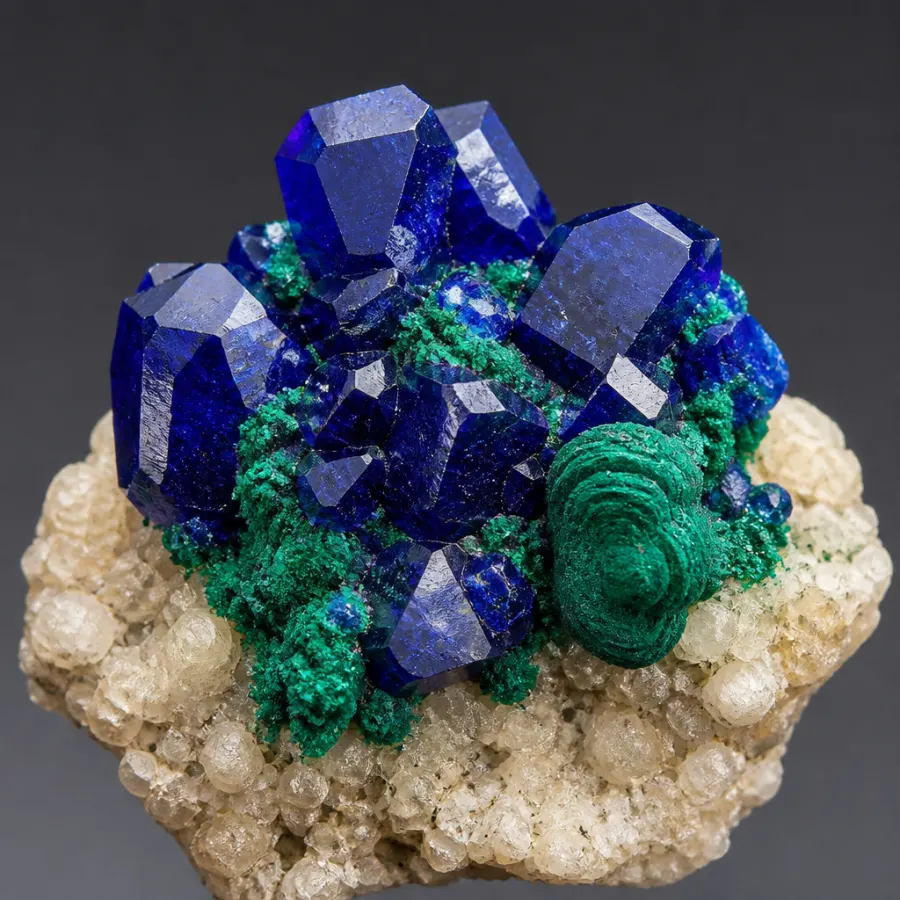
Tsumeb in Namibia is the most mineralogically diverse mine ever worked: over 200 species recorded, around 40 first described there, mined from the early 1900s until 1996. Tsumeb set the world benchmark for azurite, dioptase, cerussite, mimetite, smithsonite, malachite and wulfenite. Every fine Tsumeb specimen now comes from an old collection, so a documented label carries real weight.
In short
- More than 200 species recorded, roughly 40 type localities — the richest single mine on earth.
- World-best azurite, dioptase, cerussite, mimetite, smithsonite and germanium minerals.
- Two oxidation zones; the second produced the celebrated 1970s material.
- Closed in 1996 — supply is finite and prices reflect it.
- A Tsumeb label carries a premium the way Wheal Gorland does in Cornwall.
| Species | Why it matters |
|---|---|
| Azurite | The world standard — deep blue, sharp, lustrous |
| Dioptase | Emerald-green, rivalled only by Congo material |
| Cerussite | Giant reticulated twins found nowhere else at that size |
| Mimetite | Bright yellow to orange, superb crystals |
| Smithsonite | Vivid colour range across the whole oxidation zone |
| Germanite, renierite | Rare germanium species, largely unique to Tsumeb |
Why one mine produced so much
Tsumeb was a pipe-shaped deposit worked to well over 1,000 metres, cutting through an unusually complex sequence of copper, lead, zinc, germanium and arsenic mineralisation. Deep, prolonged oxidation did the rest — the secondary zones had time and chemistry to grow species that elsewhere occur only as crusts.
The result is a mine that is a mineralogical event rather than an ore body. Around forty species were first described from it.
First zone, second zone
Collectors distinguish the two oxidation zones and the distinction is priced. The first zone material is older and generally scarcer on the market. The second zone, worked from the late 1960s, produced the azurite and dioptase that made the locality famous internationally.
A specific zone on a label is a good sign — it usually means the specimen has real provenance behind it rather than a modern attribution.
Buying Tsumeb now
The mine closed in 1996 and there is no new production. Everything on the market is old collection material, so labels and documented history carry real weight and the supply only tightens.
Be wary of vague 'Tsumeb, Namibia' attributions on material that looks like it came from anywhere in the African copperbelt. Ask for a collection history.