Species
Mineral species notes for collectors: formula, hardness, habit, and the localities that produce the best specimens, with the tests that separate look-alikes.
These notes cover the species a British collection is built on: fluorite at hardness 4 with perfect octahedral cleavage, pyromorphite at 3.5-4 in hoppered green prisms, cassiterite at 6-7 and a density near 7, and scorodite, a hydrated arsenate common as a crust and rare as a gemmy crystal.
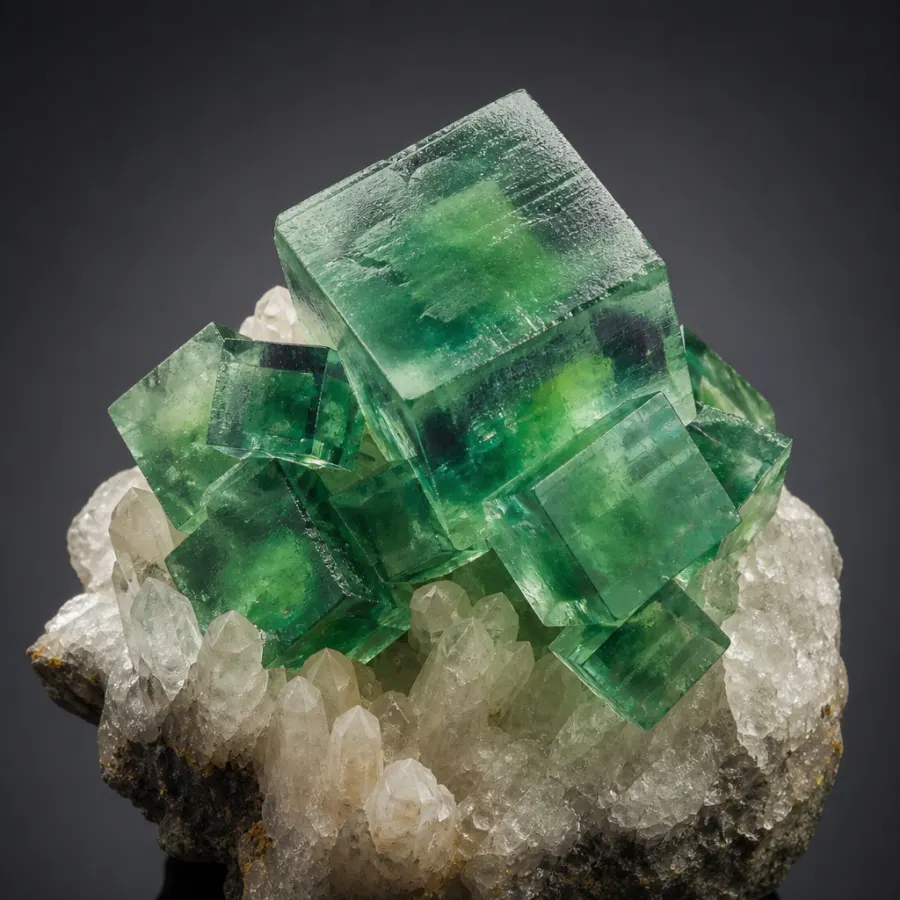
Fluorite
The most collected British mineral, and the one where locality does most of the work in setting a price. CaF2, hardness …
Read →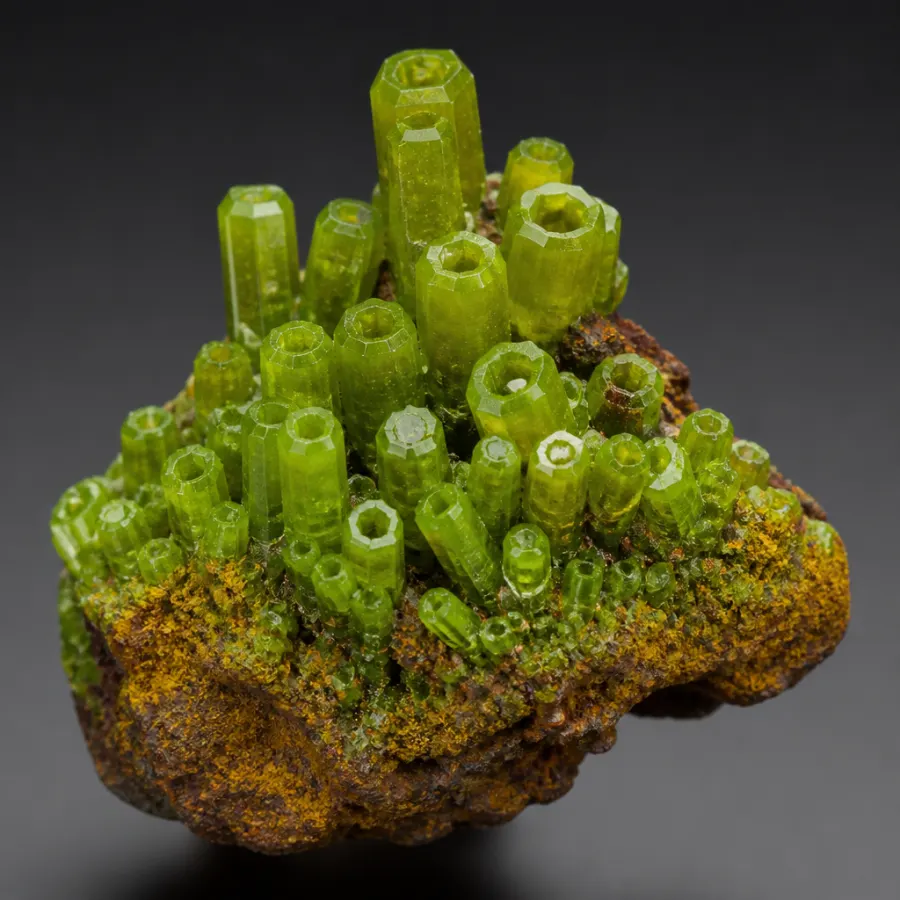
Pyromorphite
A lead phosphate that produces some of Britain's most distinctive specimens, including the barrel-shaped campylite …
Read →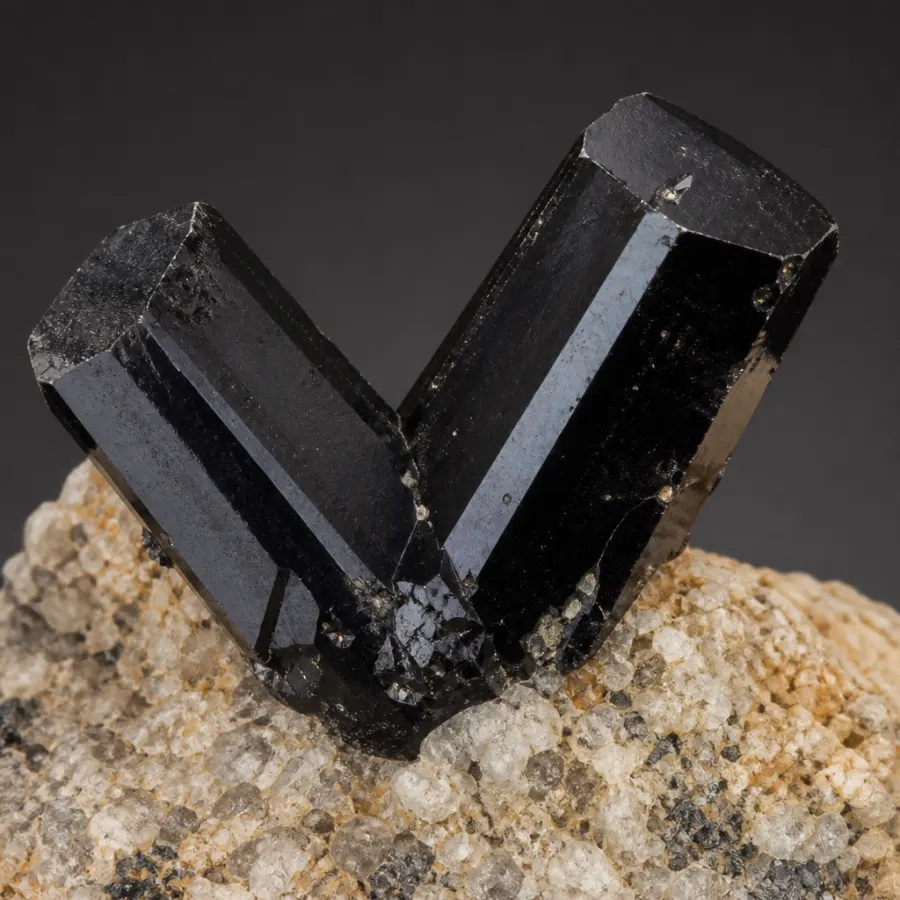
Cassiterite
The mineral that funded Cornwall. Tin dioxide at hardness 6 to 7 and a density near 7, and at its best forming the elbow…
Read →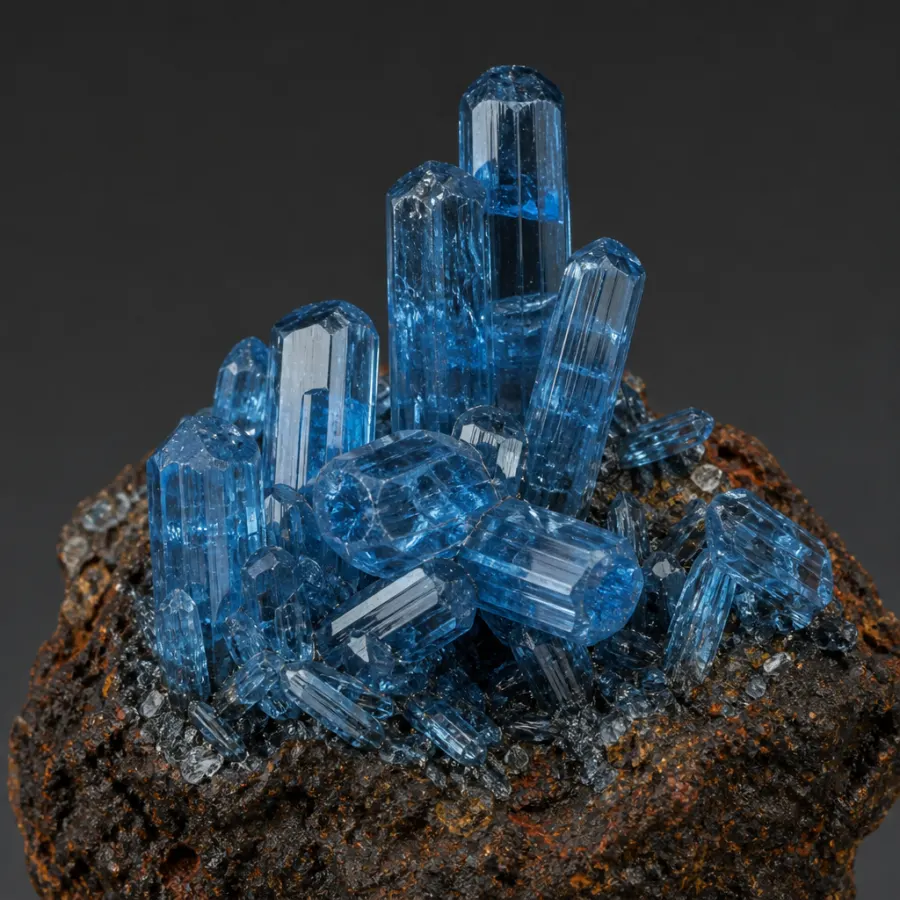
Scorodite
Common as a dull crust, rare as a transparent blue crystal. The 2006 Hemerdon dig produced the latter, and it is what pu…
Read →Azurite
The deepest blue in mineralogy, and the species Tsumeb defined. It is also the one most likely to be quietly altering to…
Read →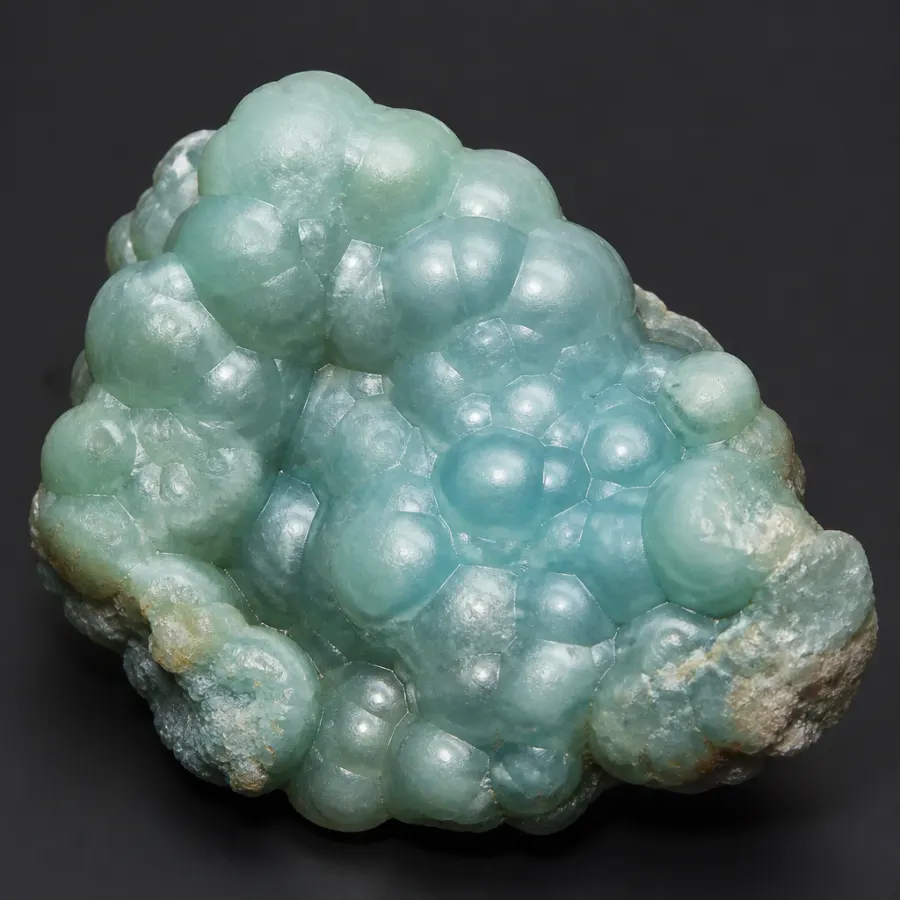
Smithsonite
A zinc carbonate that comes in almost every colour, usually as botryoidal crusts with a silky lustre unlike anything els…
Read →Vanadinite
The apatite-supergroup vanadate that turns up red-orange on Moroccan barite. Heavy at a density near 7, soft at hardness…
Read →Erythrite
Cobalt bloom: crimson blades at hardness 1.5 to 2.5, which is the single fact that governs how you buy one, how you clea…
Read →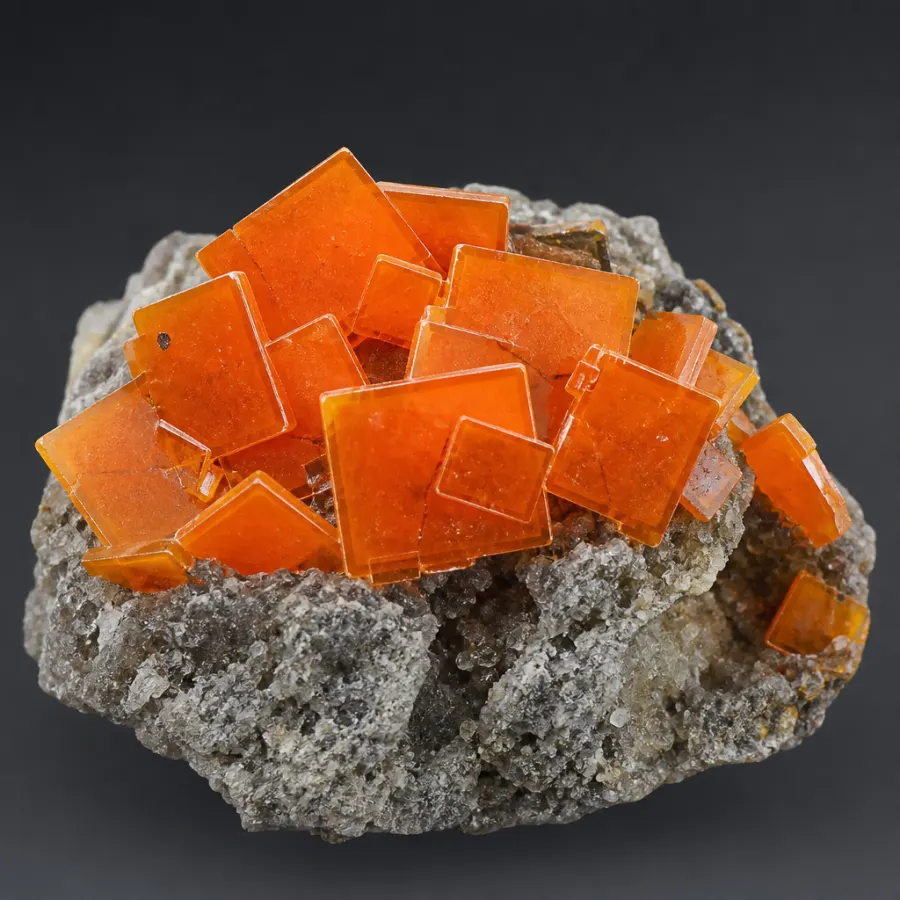
Wulfenite
PbMoO4, thin orange tablets out of the oxidised zone of lead mines, and the two Arizona localities that the whole of the…
Read →Adamite
The yellow-green arsenate that made Mapimí famous. Bright under shortwave ultraviolet, soft at hardness 3.5, and easy to…
Read →Dioptase
The green that persuaded eighteenth-century Moscow it had found emerald. Hardness 5, perfect rhombohedral cleavage, and …
Read →Mimetite
Mimetite is lead arsenate, hardness 3.5 to 4, named for imitating pyromorphite. Campylite from Dry Gill is the British f…
Read →Olivenite
Olivenite is a copper arsenate, hardness 3, from the oxidised copper zones of Cornwall. Habit, the series with adamite, …
Read →Pyrrhotite
Pyrrhotite is a non-stoichiometric iron sulphide, hardness 3.5 to 4.5, magnetic and unstable. Crystals to 40 cm, Dalnego…
Read →Vivianite
Vivianite is a hydrated iron phosphate, hardness 1.5 to 2, colourless when fresh and darkening to indigo and black. Corn…
Read →Atacamite
Atacamite is a copper chloride hydroxide, hardness 3 to 3.5, named for the Atacama Desert. Its polymorphs, the Cornish c…
Read →Pseudomalachite
Pseudomalachite is a copper phosphate, hardness 4.5 to 5, named from the Greek for false because it resembles malachite.…
Read →Hemimorphite
Hemimorphite is a zinc silicate, hardness 4.5 to 5, whose crystals are terminated differently at each end. Habit, the ca…
Read →Copper
Native copper is the metal itself, hardness 2.5 to 3 and a density of 8.95. Crystals reach 15 cm and masses of hundreds …
Read →Cuprite
Cuprite is copper oxide, hardness 3.5 to 4, density 6.14, with a refractive index of 2.849, higher than diamond. Crystal…
Read →Chalcocite
Chalcocite is Cu2S, hardness 2.5 to 3, density 5.5 to 5.8, crystals to 25 cm. Much material labelled chalcocite is reall…
Read →Rhodochrosite
Rhodochrosite is manganese carbonate, hardness 3.5 to 4, density 3.70, with perfect rhombohedral cleavage and crystals t…
Read →Cyanotrichite
Cyanotrichite is a blue copper aluminium sulphate in acicular tufts to 3 cm. Its hardness has never been determined. Den…
Read →Chalcosiderite
Chalcosiderite is the iron end of the turquoise series, hardness 4.5, density 3.22, crystals only 3 mm long. Cornwall is…
Read →Heulandite
Heulandite is a zeolite series, hardness 3.5 to 4, density 2.10 to 2.20, coffin-shaped crystals to 12 cm. Most labels om…
Read →Hematite
Hematite is Fe2O3, hardness 5 to 6, density 5.26, crystals to 13 cm. It has no cleavage at all, and the streak is cherry…
Read →Clinoclase
Clinoclase is Cu3(AsO4)(OH)3, hardness 2.5 to 3, density 4.38. Crystals reach only 9 mm, so nearly every specimen is jud…
Read →Uvite
Uvite is a calcium-magnesium tourmaline, hardness 7.5, crystals to 15 cm. The name was reassigned in 2022, so most older…
Read →Prehnite
Prehnite is Ca2Al(Si3Al)O10(OH)2, hardness 6 to 6.5, density 2.80 to 2.95. Crystals are uncommon and reach 4.5 cm; most …
Read →Kyanite
Kyanite is Al2SiO5, hardness 5.5 along the blade and 7 across it, density 3.53 to 3.65. Blades reach 0.5 m and are typic…
Read →Chalcopyrite
Chalcopyrite is CuFeS2, hardness 3.5 to 4, density 4.1 to 4.3, crystals to 10 cm. Hardness alone separates it from pyrit…
Read →Apophyllite
Apophyllite is a group, not a species: six valid names on the IMA list. Hardness 4.5 to 5, crystals to 20 cm, and a perf…
Read →Langite
Langite is a hydrated copper sulphate, hardness 2.5 to 3, crystals to 7 mm. It can form on mine walls and dumps after th…
Read →Bornite
Bornite is Cu5FeS4, hardness 3 to 3.25, density 5.06, crystals to 6 cm. It tarnishes iridescent by itself, which is why …
Read →Crocoite
Crocoite is PbCrO4, hardness 2.5 to 3, density 6.0 to 6.1, crystals to 15 cm. It is sectile rather than brittle, and its…
Read →Bournonite
Bournonite is PbCuSbS3, hardness 2.5 to 3, density 5.83, crystals to 11 cm. Repeated twinning on 110 makes the cogwheels…
Read →Marcasite
Marcasite is FeS2, hardness 6 to 6.5, density 4.887, dimorphous with pyrite. Hardness and streak do not separate the two…
Read →Torbernite
Torbernite is a copper uranyl phosphate, hardness 2 to 2.5, density 3.22, crystals to 2.5 cm. It is radioactive, and in …
Read →Goethite
Goethite is FeO(OH), hardness 5 to 5.5, density 4.28, crystals to 45 cm. Its streak is ocher-yellow, and most material l…
Read →Brochantite
Brochantite is Cu4(SO4)(OH)6, hardness 3.5 to 4, density 3.97. It shares malachite's hardness and streak, and only …
Read →Cerussite
Cerussite is PbCO3, hardness 3 to 3.5, density 6.55, adamantine and very brittle. Two separate twin laws make the reticu…
Read →Stilbite
Stilbite is a zeolite, hardness 3.5 to 4, density 2.19, sheaf-like crystals to 14 cm. The IMA list holds stilbite-Ca and…
Read →Chalcanthite
Chalcanthite is CuSO4 pentahydrate, hardness 2.5, density 2.286, crystals to 2 cm. It dissolves in water, dehydrates in …
Read →Turquoise
Turquoise is a copper aluminium phosphate, hardness 5 to 6, density 2.86, crystals to only 3 mm. Howlite at hardness 3.5…
Read →Botallackite
Botallackite is Cu2Cl(OH)3, type locality the Botallack mine in Cornwall, 1865. It is one of three polymorphs no bench t…
Read →Mendipite
Mendipite is Pb3O2Cl2, hardness 2.5, density 7.240, in cleavable masses to 12 cm. It heads a suite of four lead oxychlor…
Read →Conichalcite
Conichalcite is CaCu(AsO4)(OH), hardness 4.5, density 4.33, with a green streak. Density is what separates it from dufti…
Read →Aragonite
Aragonite is CaCO3, hardness 3.5 to 4, density 2.95, crystals to 30 cm. Calcite is the same chemistry at hardness 3 and …
Read →Willemite
Willemite is Zn2SiO4, hardness 5.5, density 3.89 to 4.19, crystals to 10 cm. It fluoresces yellow-green in both ultravio…
Read →Chrysocolla
Chrysocolla is a copper silicate of the oxidised zone, hardness 2 to 4 and density 1.93 to 2.4 — the widest density rang…
Read →Epidote
Epidote is hardness 6 to 7, density 3.38 to 3.49, in striated prisms to 35 cm. It forms a series with clinozoisite, and …
Read →Muscovite
Muscovite is a mica with crystals recorded to 4.5 m and 77 tonnes. The Handbook gives it two hardness values — 2.5 along…
Read →Halite
Halite is hardness 2 to 2.5, density 2.168, in cubes to 1 m. It deliquesces above 75.3% relative humidity at 25 °C, whic…
Read →Molybdenite
Molybdenite is hardness 1 to 1.5, density 4.62 to 4.73, in tabular crystals to 15 cm. Graphite looks identical and weigh…
Read →Scolecite
Scolecite is a zeolite, hardness 5 to 5.5, density 2.25 to 2.29, in radiating sprays to 30 cm. Mesolite is one natrolite…
Read →Cobaltite
Cobaltite is hardness 5.5, density 6.33, in pseudocubic crystals to 8 cm. It is one of eight silver-white species a dens…
Read →Libethenite
Libethenite is hardness 4, density 3.97, in olive-green crystals to 3 cm. Olivenite is the arsenate of the same structur…
Read →Talc
Talc is a magnesium sheet silicate, hardness 1 and density 2.58 to 2.83. It is the only species in this site's refe…
Read →Graphite
Graphite is carbon, hardness 1 to 2 and density 2.09 to 2.23. Molybdenite looks identical and is more than twice as dens…
Read →Magnesite
Magnesite is MgCO3, hardness 3.5 to 4.5 and density 3.00 — denser than the turquoise it is dyed to imitate, which is why…
Read →Analcime
Analcime is NaAlSi2O6·H2O, hardness 5 to 5.5 and density 2.24 to 2.29. Cubic trapezohedra and almost no cleavage separat…
Read →Brucite
Brucite is Mg(OH)2, hardness 2.5 and density 2.39. Forming it from periclase more than doubles the volume, which is why …
Read →Descloizite
Descloizite is PbZn(VO4)(OH), hardness 3 to 3.5, density near 6.2. Its calculated density sits within 0.24% of mottramit…
Read →Vesuvianite
Vesuvianite is hardness 6 to 7, density 3.32 to 3.43. Grossular garnet grows beside it at 3.594, and the two density ran…
Read →Pharmacosiderite
Pharmacosiderite is a cubic iron arsenate, hardness 2.5 and density 2.797 — one of eleven species covered here that were…
Read →Native silver
Native silver is hardness 2.5 to 3, density 10.1 to 11.1 and ductile. Only three species in this site's reference s…
Read →Pyrargyrite
Pyrargyrite is Ag3SbS3, hardness 2.5, density 5.82, deep red with a purplish red streak. It darkens irreversibly on expo…
Read →Tetrahedrite
Tetrahedrite is hardness 3 to 4.5 and density 4.97, with tetrahedral crystals to 15 cm. Since 2019 it is a group of 34 s…
Read →Microcline
Microcline is KAlSi3O8, hardness 6 to 6.5 and density 2.54 to 2.57. The Handbook gives it crystals to 50 m and 13,500 t,…
Read →Orthoclase
Orthoclase is KAlSi3O8, hardness 6 to 6.5 and density 2.55 to 2.63. The three twin laws named after localities are all n…
Read →Rosasite
Rosasite is a copper zinc carbonate, hardness 4.5 and density 4.0 to 4.2, in blue-green botryoidal crusts. The IMA redef…
Read →Lepidolite
Lepidolite is the pink lithium mica, hardness 2.5 to 4 and density 2.8 to 2.9. It is not a valid species: the name cover…
Read →Stellerite
Stellerite is a calcium zeolite, density 2.13 and perfect {010} cleavage, in radiating spheres to 12 cm. Its Handbook sh…
Read →Forsterite
Forsterite is Mg2SiO4, the magnesium end member of the olivine group: hardness 7, density 3.275. Gem peridot is forsteri…
Read →Scapolite
Scapolite is not an IMA species but the group name for the marialite-meionite series: tetragonal, hardness 5 to 6, densi…
Read →Mesolite
Mesolite is a natrolite-group zeolite, hardness 5, density 2.26, in hairlike tufts. Birefringence 0.0005 is the lowest o…
Read →Chalcoalumite
Chalcoalumite is CuAl4(SO4)(OH)12·3H2O, hardness 2.5, density 2.29, in turquoise-green crusts: one copper to four alumin…
Read →Metatorbernite
Metatorbernite is Cu(UO2)2(PO4)2 with 8 water, hardness 2.5, density 3.52 to 3.70. Torbernite loses 4 of its 12 waters t…
Read →Bassetite
Bassetite is an iron uranyl phosphate, hardness 2.5, density 3.40 to 3.63, in olive to bronzy tablets to 3 mm, first des…
Read →Beudantite
Beudantite is PbFe3(AsO4)(SO4)(OH)6, hardness 3.5 to 4.5, density 4.48. Corkite matches its hardness and nearly its dens…
Read →Cronstedtite
Cronstedtite is a serpentine-group iron silicate, hardness 3.5, density 3.34 to 3.35: black tapering prisms, dark olive-…
Read →Galena
Galena is PbS, 86.60% lead: hardness 2.5 to 2.75, density 7.58, lead-grey streak and perfect cubic cleavage. Only four s…
Read →Ludlockite
Ludlockite is PbFe4As10O22, a ferric iron arsenite from Tsumeb: red to orange-brown hairlike laths to 4 cm, hardness 1.5…
Read →Segnitite
Segnitite is PbFe3(AsO4)(AsO3OH)(OH)6, approved 1991 from Broken Hill: beudantite with a second arsenate for sulphate. H…
Read →Vauquelinite
Vauquelinite is CuPb2(CrO4)(PO4)(OH), green to brown, hardness 2.5 to 3, density 6.16. It is 7.37% chromium and shares f…
Read →Kutnohorite
Kutnohorite is CaMn(CO3)2, the manganese dolomite-group carbonate: pink to white, hardness 3.5 to 4, density 3.12 agains…
Read →Axinite
Axinite is not an IMA species but a group: axinite-(Fe), -(Mn), -(Mg) and tinzenite. Triclinic axe-head crystals, hardne…
Read →Wardite
Wardite is NaAl3(PO4)2(OH)4·2H2O, a tetragonal phosphate: hardness 5, density 2.81 to 2.87, perfect {001} cleavage, pseu…
Read →Stibarsen
Stibarsen is SbAs, an arsenic-group mineral: hardness 3 to 4, density 5.8 to 6.2, tin-white, intergrown with arsenic or …
Read →Gyrolite
Gyrolite is NaCa16(Si23Al)O60(OH)8·14H2O: white pearly balls to 5 cm in basalt, hardness 3 to 4, flexible flakes. How to…
Read →Cowlesite
Cowlesite is CaAl2Si3O10·5-6H2O, a zeolite approved in 1975 from Goble, Oregon: thin pearly laths to 2 mm in basalt vesi…
Read →Sturmanite
Sturmanite is a Ca-Fe sulphate-borate of the ettringite group from Kuruman, South Africa: bright yellow crystals to 40 c…
Read →Cannizzarite
Cannizzarite is a lead bismuth sulphide, Pb8Bi10S23 on the IMA list, from fumaroles on Vulcano: silvery laths to 2 mm, h…
Read →Stibnite
Stibnite is Sb2S3, 71.69% antimony: hardness 2, density 4.63, lead-grey and highly flexible, in crystals to 0.65 m. The …
Read →Sphalerite
Sphalerite is zinc sulphide, the main zinc ore: hardness 3.5 to 4, density 3.9 to 4.1, resinous to adamantine, iron on 3…
Read →Celestine
Celestine is strontium sulphate, SrSO4, 47.70% strontium: hardness 3 to 3.5, density 3.97, pale blue tabular crystals to…
Read →Realgar
Realgar is AsS, 70.03% arsenic: red to orange, hardness 1.5 to 2, density 3.56, crystals to 12 cm. Its sheet says it dis…
Read →Microlite
Microlite is no longer a species but a group name: 12 tantalum-dominant pyrochlore-supergroup minerals on the IMA list. …
Read →Bindheimite
Bindheimite, Pb2Sb2O6(O,OH), is listed by the IMA as Q, questionable, since 2013; not discredited. Yellow earthy crusts …
Read →Actinolite
Actinolite is the green calcic amphibole Ca2(Mg,Fe)5Si8O22(OH)2: bladed crystals to 15 cm, hardness 5 to 6, cleavages at…
Read →Beryl
Beryl is Be3Al2Si6O18: hexagonal prisms to 18 m, hardness 7.5 to 8, density 2.63 to 2.97. Emerald, aquamarine and morgan…
Read →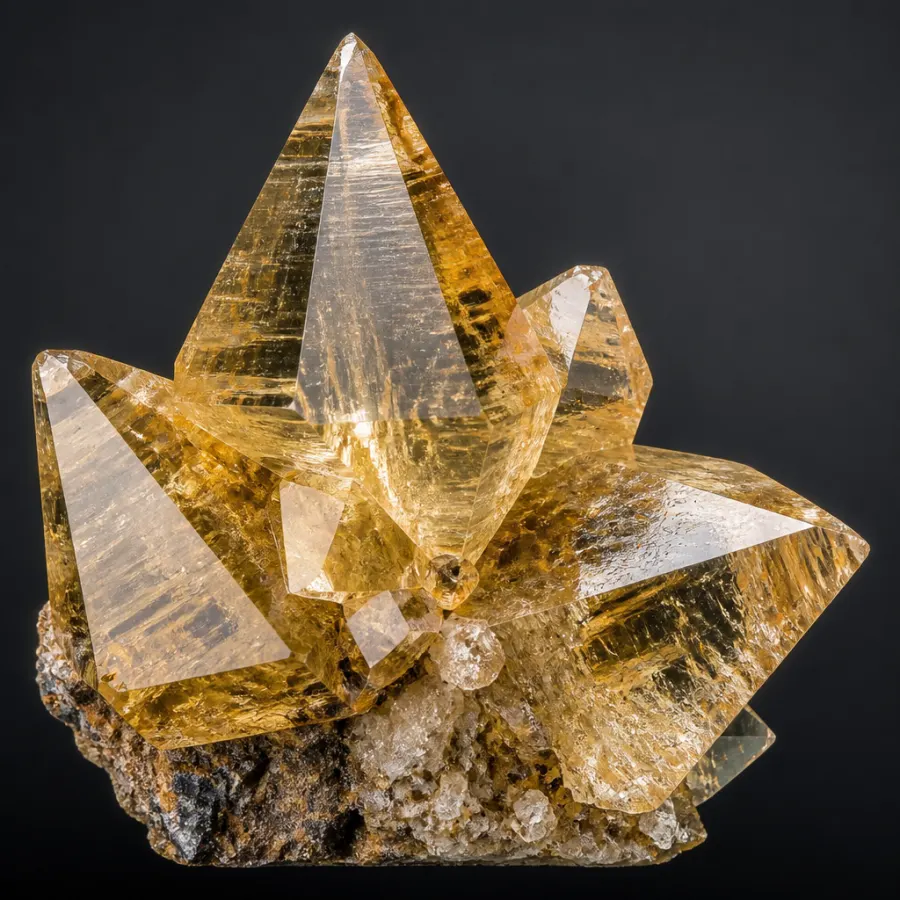
Calcite
Calcite is CaCO3: hardness 3, density 2.7102, perfect {10-11} cleavage, over 1000 crystal forms. 60 of the other 175 she…
Read →Malachite
Malachite is Cu2(CO3)(OH)2: hardness 3.5 to 4, density 4.05, pale green streak. Of 29 green copper sheets in our set, on…
Read →Baryte
Baryte is BaSO4: hardness 3 to 3.5, density 4.50, crystals to 85 cm. Of 69 white-streak sheets in our set, only it is th…
Read →Aurichalcite
Aurichalcite is (Zn,Cu)5(CO3)2(OH)6: sky-blue silky tufts, hardness 1 to 2, the softest of the 15 CO3 sheets in our set.…
Read →Apatite
Apatite is a group name: fluorapatite, hydroxylapatite and chlorapatite, calcium phosphates of hardness 5, the 5 on Mohs…
Read →Tourmaline
Tourmaline is a group name: 42 IMA species share one borosilicate formula. Schorl, elbaite, dravite and the rest, hardne…
Read →Cavansite
Cavansite is Ca(V4+O)Si4O10·4H2O: sky-blue prisms to 1 mm and rosettes to 5 mm, hardness 3 to 4, in zeolite cavities. Ty…
Read →Olivine
Olivine is a group name, not a species: forsterite Mg2SiO4 and fayalite Fe2SiO4 are its common ends, hardness 6.5 to 7. …
Read →Quartz
Quartz is SiO2, hardness 7, density 2.65, with cleavage rarely seen. Rock crystal, amethyst, citrine, smoky and rose qua…
Read →Pyrite
Pyrite is iron disulphide, FeS2: cubic, hardness 6 to 6.5, density 5.018, greenish-black streak. How it differs from gol…
Read →Gypsum
Gypsum is CaSO4·2H2O, hardness 1.5 to 2, density 2.317, flexible cleavage flakes. Selenite, satin spar, alabaster and de…
Read →Siderite
Siderite is iron carbonate, FeCO3: hardness 3.75 to 4.25, density 3.96, perfect rhombohedral cleavage, 48.20% iron. How …
Read →Dolomite
Dolomite is CaMg(CO3)2: hardness 3.5 to 4, density 2.86, rhombohedral cleavage, saddle-shaped aggregates. Where dolomite…
Read →Chrysoberyl
Chrysoberyl is BeAl2O4, hardness 8.5, density 3.75; alexandrite is its colour-change variety. Why weighing fails on a cu…
Read →Magnetite
Magnetite is Fe3O4, strongly magnetic, hardness 5.5 to 6.5, density 5.175, black streak, 72.36% iron. Telling it from th…
Read →Boleite
Boleite is a deep blue cubic chloride of lead, silver and copper, hardness 3 to 3.5, named for Boleo, Mexico. How to tel…
Read →Ludlamite
Ludlamite is a hydrated iron phosphate, Fe3(PO4)2·4H2O: monoclinic, apple-green, hardness 3.5, density 3.12 to 3.19, nam…
Read →Cinnabar
Cinnabar is mercury sulphide, HgS: hexagonal, cochineal-red, scarlet streak, hardness 2 to 2.5, density 8.176. How to te…
Read →Stannite
Stannite is Cu2FeSnS4, a steel-grey tin sulphide: tetragonal, hardness 4, density 4.3 to 4.5, type locality Wheal Rock, …
Read →Rhodonite
Rhodonite is a pink manganese silicate, hardness 5.5 to 6.5, density 3.57 to 3.76. IMA formula: one calcium per five sil…
Read →Topaz
Topaz is Al2SiO4F2: hardness 8, density 3.49 to 3.57, perfect cleavage. A 20.00 g piece weighs 14.27 g or more in water;…
Read →Spodumene
Spodumene is LiAlSi2O6, a lithium pyroxene: hardness 6.5 to 7, density 3.03 to 3.23, two cleavages near 87 degrees, 3.73…
Read →Corundum
Corundum is aluminium oxide, Al2O3: hardness 9, density 3.98 to 4.10, no cleavage. Ruby and sapphire are its varieties. …
Read →Arsenopyrite
Arsenopyrite is FeAsS: silver-white to steel-grey, hardness 5.5 to 6, density 6.07. The 17-gram line separates it from l…
Read →Anglesite
Anglesite is lead sulphate, PbSO4: hardness 2.5 to 3, density 6.38, adamantine, white streak. It can band around galena …
Read →Leadhillite
Leadhillite is Pb4(SO4)(CO3)2(OH)2: hardness 2.5 to 3, density 6.55, pearly basal cleavage. Two other minerals share its…
Read →Caledonite
Caledonite is Pb5Cu2(SO4)3(CO3)(OH)6: verdigris to blue-green, pale green streak, hardness 2.5 to 3, density 5.6 to 5.76…
Read →Zircon
Zircon is Zr(SiO4): hardness 7.5, density 4.6 to 4.7, radioactive when metamict, per the sheet. A crystalline 20.00 g pi…
Read →Rutile
Rutile is TiO2: tetragonal, hardness 6 to 6.5, density 4.23, adamantine. Five IMA rows share its formula, and brookite r…
Read →Almandine
Almandine is the iron-aluminium garnet, Fe2+3Al2(SiO4)3: cubic, hardness 7 to 7.5, density 4.318, one index of 1.830. It…
Read →Spessartine
Spessartine is the manganese garnet, Mn2+3Al2(SiO4)3: cubic, hardness 7 to 7.5, density 4.190, n 1.800. Its Kinko analys…
Read →Linarite
Linarite is PbCu(SO4)(OH)2: azure-blue, pale blue streak, hardness 2.5, density 5.35. Named for Linares, Spain; fine cry…
Read →Lanarkite
Lanarkite is Pb2O(SO4): grey to pale green, white streak, hardness 2 to 2.5, density 6.92, flexible in thin laminae. Lea…
Read →Proustite
Proustite is Ag3AsS3: scarlet-vermilion, vermilion streak, hardness 2 to 2.5, density 5.57; it darkens in light. How to …
Read →Benitoite
Benitoite is BaTiSi3O9: hexagonal, hardness 6 to 6.5, density 3.65, blue under shortwave UV. Its sheet names ten places,…
Read →Opal
Opal is SiO2·nH2O, up to 20% water, with an IMA row but no Handbook sheet. GIA: hardness 5 to 6.5, SG 2.15. A 20.00 g pi…
Read →Chalcedony
Chalcedony is quartz in crystallites 50 to 100 nm across, with no IMA row. Moganite at 5 to 20 wt% and water at 1 to 2 w…
Read →Jadeite
Jadeite is the sodium aluminium pyroxene NaAlSi2O6: monoclinic, hardness 6 to 7, density 3.24 to 3.43, cleavages near 87…
Read →Variscite
Variscite is Al(PO4)(H2O)2: orthorhombic, hardness 4.5, density 2.57 to 2.61, green and massive. No copper; its indices …
Read →Natrolite
Natrolite is Na2Al2Si3O10·2H2O: hardness 5 to 5.5, density 2.20 to 2.26, prisms to 1 m, commonly fluorescent orange to y…
Read →Wavellite
Wavellite is Al3(PO4)2(OH,F)3·5H2O: radial balls to 3 cm, hardness 3.5 to 4, density 2.36. Named for William Wavell of D…
Read →Labradorite
Labradorite is plagioclase feldspar, An50 to An70: hardness 6 to 6.5, density 2.68 to 2.72, not an IMA species. A 20 g p…
Read →Sodalite
Sodalite is Na4(Si3Al3)O12Cl on the IMA list: cubic, hardness 5.5 to 6, density 2.27 to 2.33, white streak, red-orange u…
Read →Lazurite
Lazurite is the blue of lapis lazuli: a sodalite-group mineral redefined by the IMA in 2021, hardness 5 to 5.5, density …
Read →Pectolite
Pectolite is NaCa2Si3O8(OH): triclinic, hardness 4.5 to 5, density 2.84 to 2.90, radiating needles. Larimar is its blue …
Read →