Buying old collection material
Nearly all classic British material is old, and that makes the label part of the value and restoration a normal question to ask rather than an accusation.
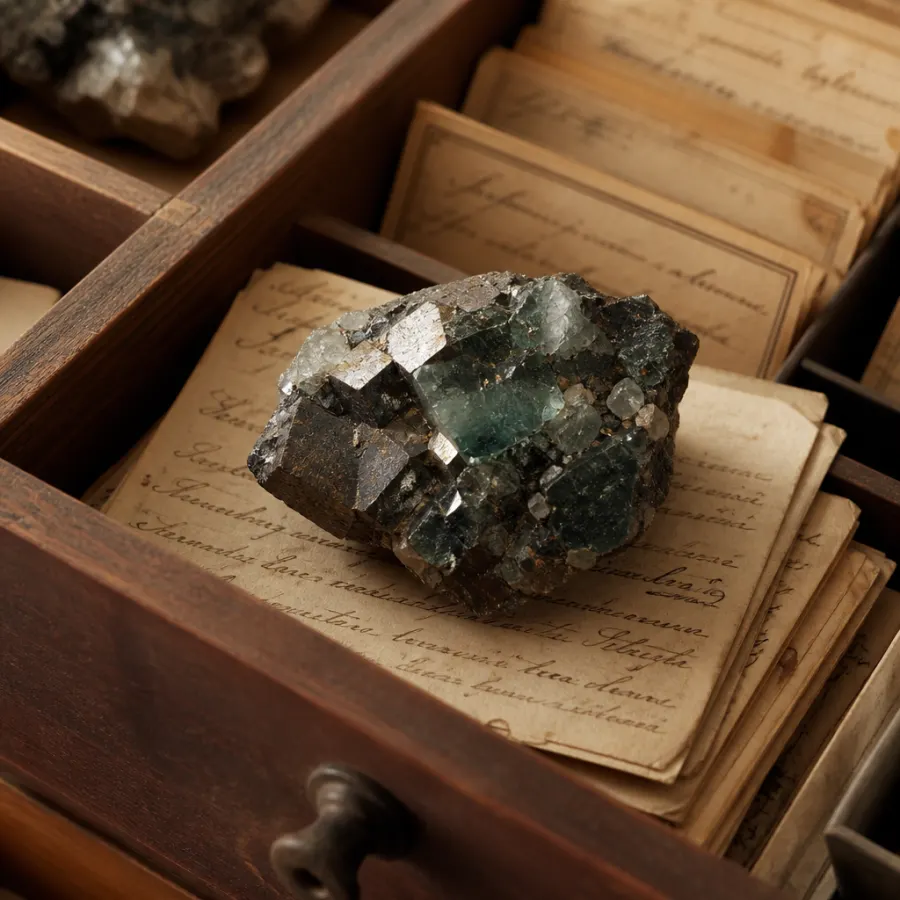
Most fine British material was collected in the 1800s and has circulated between cabinets since. The old label is part of the specimen, and separating them permanently reduces value. Restoration is normal on pieces 100 years old or more and must be disclosed. Ask for the specific mine, never just the county.
In short
- Most fine British material was collected a century or more ago and has circulated between cabinets since.
- The label is part of the specimen. Separating them permanently reduces value.
- Restoration is normal on classic pieces. Undisclosed restoration is the problem.
- Ask for the specific mine, not just the county.
- A documented chain through known collections is worth real money.
| Ask | Why |
|---|---|
| Which mine, not just which county? | 'Cornwall' is a region; a serious piece has a mine |
| Are there old labels, and do they come with it? | Labels carry provenance and value |
| Has it been repaired, reconstructed or consolidated? | Normal on old material — but must be disclosed |
| Is the locality on the label, or attributed later? | An old label is evidence; a modern one is a claim |
| Can I see it under magnification? | Small-crystal localities are judged with a loupe |
Why labels are not paperwork
On classic British material, an old label is evidence about where a specimen came from, written by someone closer to the source than anyone alive. It is the difference between a documented Wheal Gorland piece and a piece someone believes is from Wheal Gorland.
Keep labels with specimens. Photograph them. If you rehouse a collection, transfer the labels physically rather than transcribing them — a transcription is not evidence.
Restoration, honestly
A specimen that has been in circulation for 150 years has usually been handled, sometimes dropped, and often repaired. Repair, reassembly and consolidation of fragile species are all routine on old material.
None of that is disqualifying and none of it should be hidden. Ask directly, and treat a straight answer as a good sign rather than a red flag. What should concern you is a seller who has never considered the question.
Attribution drift
Localities get upgraded as specimens change hands — a vague label becomes a specific one, a district becomes a famous mine. This happens without dishonesty, through repeated small assumptions.
Weight your confidence by the age and specificity of the documentation, not by the confidence of the current label.