Derbyshire
The Peak District orefield gave Britain its only ornamental fluorite in Blue John, centuries of lead mining behind it, and matlockite, named for Matlock.
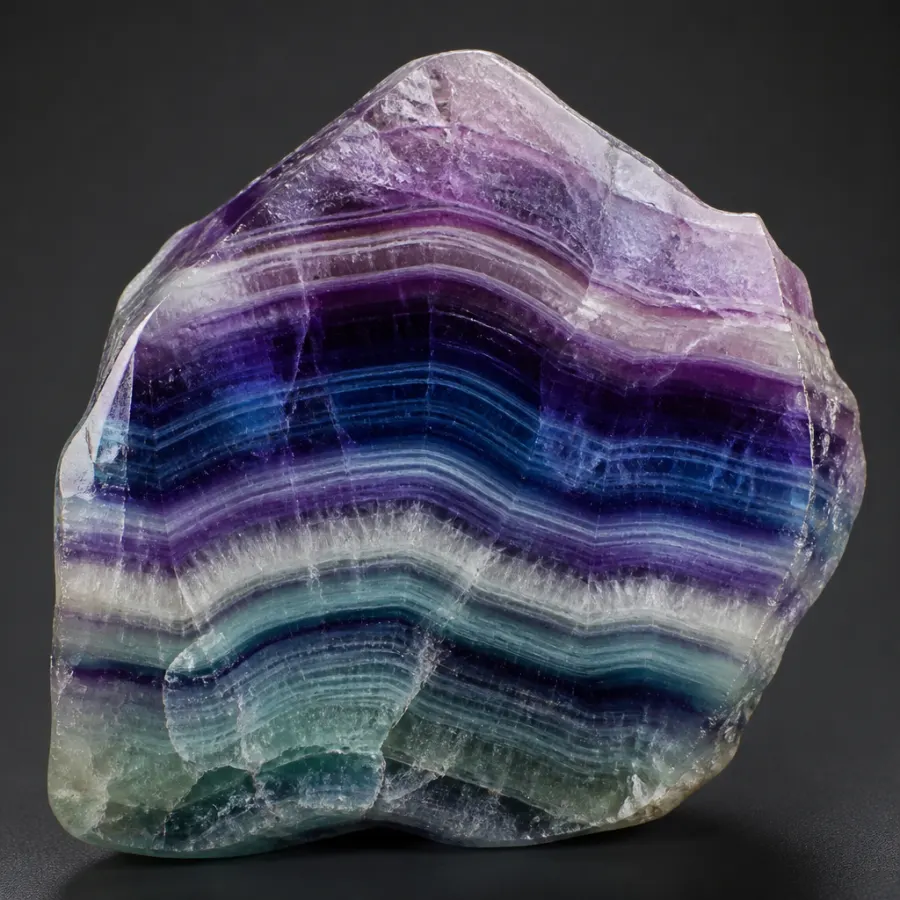
Blue John is a banded purple-and-white ornamental fluorite found at Castleton and essentially nowhere else on earth, worked since the 1700s from two caverns and now extracted in only small quantities each year. The wider Peak District orefield produced fluorite, calcite, barite and galena, with Milldam Mine the modern specimen source.
In short
- Blue John is a banded purple-and-white fluorite found at Castleton and essentially nowhere else on earth.
- It is worked as an ornamental stone rather than collected as crystals — bowls, urns and jewellery.
- The wider orefield produced fluorite, calcite, barite and galena from lead workings.
- Milldam Mine is the significant modern specimen source.
- Blue John extraction is now very limited, which is the whole basis of its price.
| Material | Where | Form |
|---|---|---|
| Blue John | Castleton — Treak Cliff and Blue John Cavern | Banded ornamental fluorite, worked not crystallised |
| Fluorite | Milldam Mine and the wider orefield | Crystals, often purple or amber |
| Calcite | Widespread | Often on fluorite |
| Barite | Widespread | Gangue with the lead ores |
| Galena | The lead workings | The economic mineral |
Blue John is a variety, not a species
Blue John is fluorite. What makes it distinctive is the banding — alternating purple, blue and white or yellow zones — and the fact that it occurs in masses large enough to be turned and carved.
Its rarity is geographic rather than mineralogical: fluorite is common worldwide, but banded ornamental fluorite of this character is essentially confined to a small area at Castleton.
Why extraction is now tiny
The workable veins are limited and lie within caverns that are also visitor attractions and protected sites. Extraction today is measured in small quantities per year rather than in tonnes.
That scarcity is why worked Blue John commands what it does, and why provenance matters — material sold as Blue John that is not from Castleton is a recurring problem in the trade.
The rest of the orefield
Away from Blue John, Derbyshire is a lead orefield like the North Pennines, and produced fluorite, calcite, barite and galena in the usual association. Milldam Mine is the significant modern source for specimen fluorite.
Derbyshire fluorite tends toward purple and amber where Weardale runs green, so the two counties complement each other in a British suite rather than duplicating.