The Mendip Hills
A short range of Somerset limestone that gave its name to the mineral mendipite and produced a lead-manganese assemblage found almost nowhere else on earth.
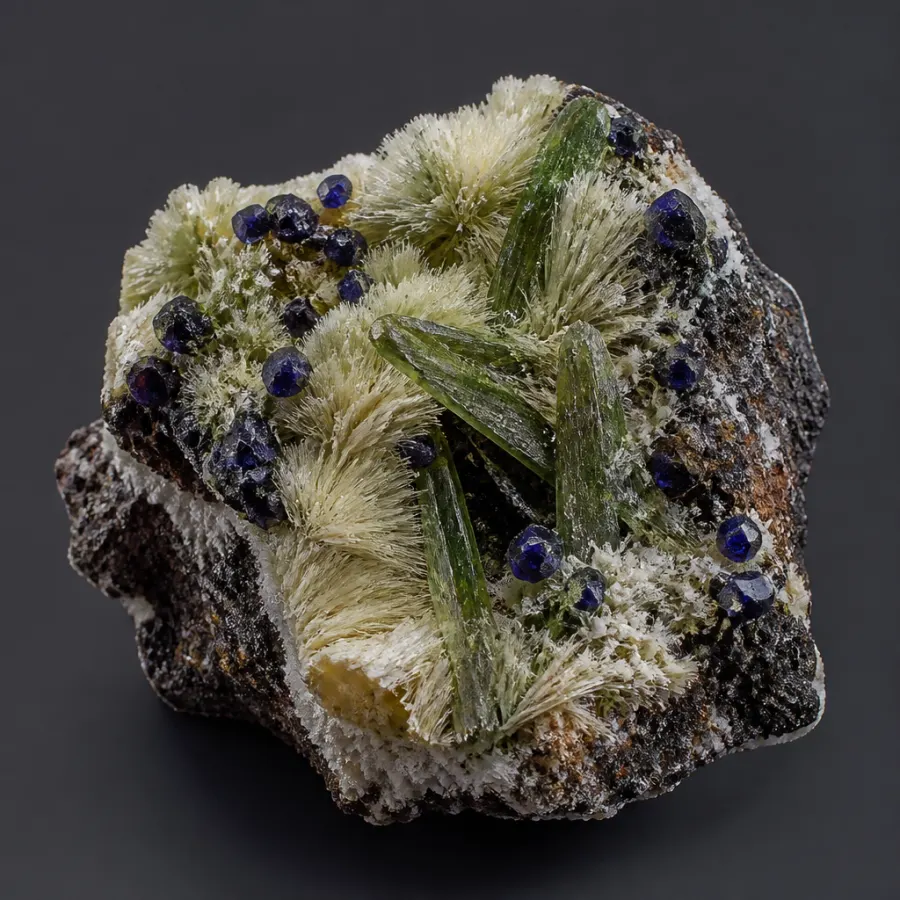
Mendipite, a rare lead oxychloride, was first described from these Somerset hills in 1839 and carries their name. The assemblage is lead-manganese: mendipite, chloroxiphite, diaboleite, hydrocerussite and crednerite. Higher Pitts Mine near Priddy is the classic source; Merehead Quarry produced excellent later material including fine calcite.
In short
- Mendipite — a lead oxychloride — is named for these hills and is rare worldwide.
- The distinctive assemblage is lead-manganese: mendipite, hydrocerussite, chloroxiphite, diaboleite, crednerite.
- Higher Pitts Mine near Priddy is the classic source.
- Merehead / Torr Works Quarry produced excellent later material.
- This is species-collector territory — mineralogically important rather than decorative.
| Species | Character | Note |
|---|---|---|
| Mendipite | White to cream fibrous masses | Named for the locality |
| Chloroxiphite | Olive-green blades | Genuinely rare |
| Diaboleite | Deep blue | Striking under magnification |
| Hydrocerussite | White platy crystals | Common associate |
| Crednerite | Black metallic | Manganese species |
| Calcite | Widespread | Merehead produced fine material |
A type locality that stayed obscure
Mendipite was described from these hills and carries their name, which is a distinction shared by relatively few British localities. Despite that, Mendip material has never had the general recognition of Cornwall or Weardale, because the suite is not decorative — it is white, cream and olive rather than blue, green and lustrous.
For a collector interested in species rather than display, that mismatch is an opportunity. Mendip rarities can be acquired for less than their scarcity would suggest.
Higher Pitts and Merehead
Higher Pitts Mine near Priddy is the classic source for the oxychloride suite. Merehead Quarry, also known as Torr Works, produced significant later material including excellent calcite.
Both are limestone settings where lead mineralisation reacted with manganese-rich ground, which is the unusual chemistry behind the assemblage.
Handling
Several Mendip species are lead-bearing and some are soft. Mendipite in particular is fibrous and easily damaged.
Store these in individual boxes rather than loose in a drawer, keep them out of direct sunlight, and wash your hands after handling — the same ordinary practice that applies to any lead mineral.