Weardale and the North Pennines
The North Pennine orefield produced British fluorite at a quality that competes internationally, and one mine at Rogerley made it fluoresce in daylight.
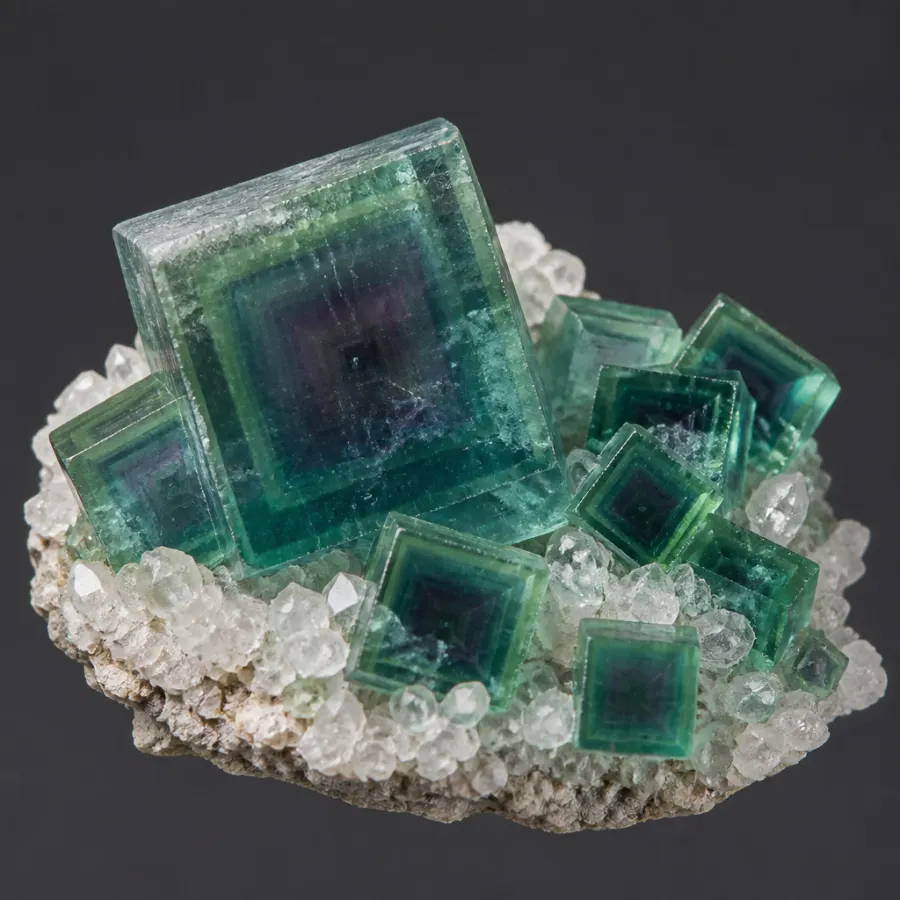
Weardale and the wider North Pennine orefield form Britain's classic fluorite locality, worked for lead from the 1700s. Rogerley Mine in Weardale produced green fluorite that fluoresces blue in ordinary daylight, not only under UV. Boltsburn, also in Weardale, is celebrated for lustrous crystals over 5 cm.
In short
- The North Pennine orefield is the classic British fluorite locality.
- Rogerley Mine produced green fluorite with a strong blue daylight fluorescence — visible outdoors, not only under UV.
- Boltsburn Mine is the historic name, celebrated for large, lustrous fluorite.
- Associated species include galena, sphalerite, witherite, quartz and calcite.
- Weardale fluorite is one of the few British materials that competes on the world stage rather than on national interest.
| Mine or area | Known for | Note |
|---|---|---|
| Rogerley | Green fluorite, daylight-fluorescent | The modern classic |
| Boltsburn | Large lustrous fluorite | The historic classic |
| Heights Quarry | Fluorite, galena | Quarry-sourced |
| Frazer's Hush | Fluorite | Later working |
| Nenthead / Alston Moor | Witherite, alstonite, barytes | Different character, same orefield |
The daylight fluorescence
Most fluorite fluoresces under ultraviolet light. Rogerley material does something less common: it shows a strong blue fluorescence in ordinary daylight, because sunlight contains enough long-wave UV to excite it.
The practical effect is a green crystal that reads blue at the edges outdoors and green indoors. It is the reason Rogerley material became internationally known rather than remaining a British speciality.
Why the North Pennines produced so much
The orefield was worked extensively for lead, and fluorite occurred as gangue — the material the miners were not after. That is why so much of it survived in quantity and quality: it was not the target, and it was often left in place or discarded where a targeted mineral would have been crushed.
Later working specifically for fluorspar, and specimen recovery by collectors and small operations, brought the best of it out.
Alston Moor and the barium minerals
North of Weardale, the Alston Moor and Nenthead workings produced a different suite: witherite, alstonite and barytocalcite among them. Witherite in particular is a British speciality, and Nenthead is one of the localities that defines it.
These are less immediately showy than Weardale fluorite and correspondingly less chased, which makes them good value for a collector building a British suite on mineralogical rather than decorative grounds.